Experience culture

Out and about in King Ludwig's Palace Park

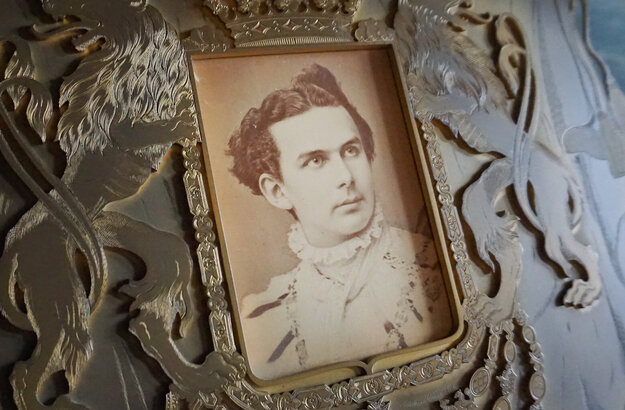
The immortal fairytale king is still present in the dream landscape right at the foot of the Alps and yet with a wide view of the Alpine foothills and the numerous lakes: King Ludwig II. He grew up around Füssen, spent most of his life here and built a castle like a dream - Neuschwanstein. Nowhere is the landscape more regal, the mountains and castles more majestic and the stories more mystical. The nearby town of Füssen with its historic town center also has many surprises in store. Discover hidden places, famous sights and feel the very special flair of the town. In Füssen, the Allgäu sounds different, namely the romantic sound of lutes and violins. The best way to get to know the old town and its history is on a guided tour or on your own with the Lauschtour.

Culturally, Füssen and its surroundings have more to offer than just the famous castles. Highlight events such as the Street Festival or the Romantic Advent Market, the captivating musical Ludwig² in the Neuschwanstein Festival Hall or the surrounding historic Allgäu towns will whet your appetite for a cultural vacation in the region.
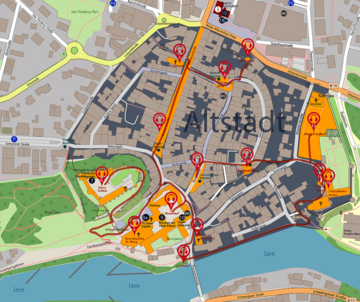
Der Stadtplan der Füssener Altstadt, erstellt mit der Lauschtour App, zeigt die historische Innenstadt in einer Satellitenperspektive.
Tipp

Audio city tour

The audio city tour takes you to the most important sights in Füssen free of charge and shows you a very special view of the city.

Leaflets and flyers

View, download or order brochures, local maps and leaflets.
A small stack of brochures

Frequently asked questions about culture in Füssen

What can I experience in Füssen's old town?

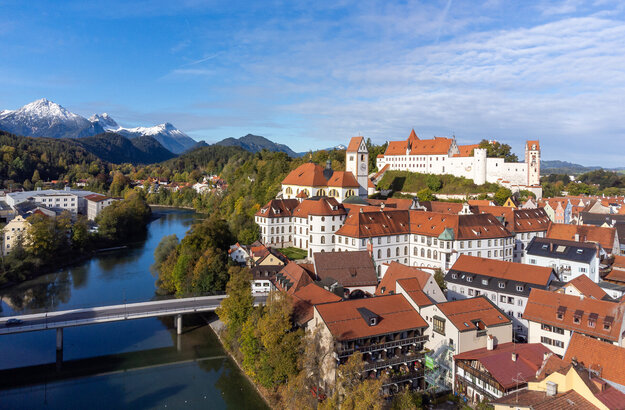
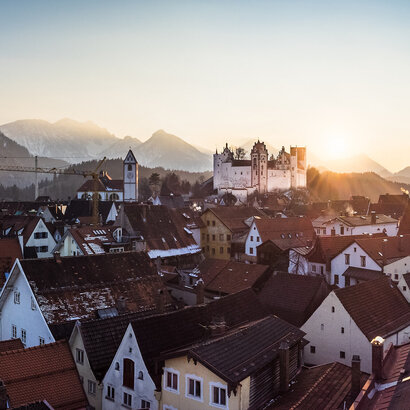
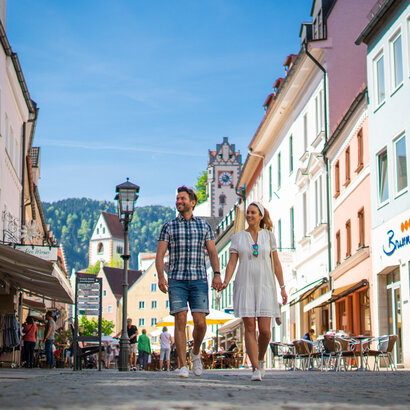
The old town of Bavaria's highest-lying town combines medieval lanes and the old town wall with Baroque churches and monasteries. In the Reichenstraße pedestrian zone and on the squares you'll find small owner-run shops, cafés and restaurants. Good viewpoints are the "Quaglioblick" from Franziskanerplatz, looking at the High Castle and St. Mang Abbey, and the clock tower of the High Castle with its view over the rooftops. Explore on your own with the Lauschtour audio tour or join a guided city tour for background knowledge. Füssen's old town

What are the highlights of Füssen's old town?

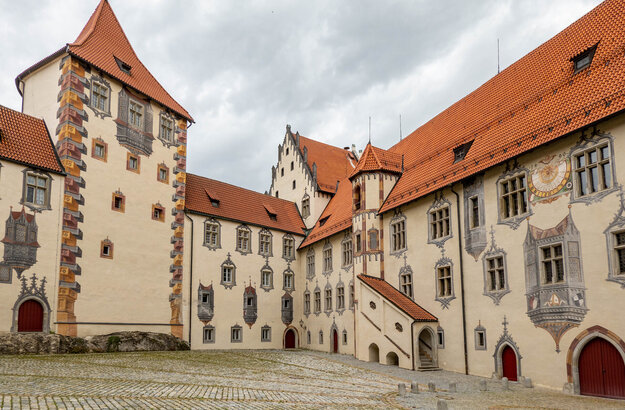
The High Castle (Hohes Schloss), once the summer residence of the Prince-Bishops of Augsburg, towers above the town. It is known for the illusionistic paintings on its courtyard façades; inside, a visit to the galleries includes the Knights' Hall, the battlements and the clock tower. In the Baroque former Benedictine Abbey of St. Mang on the Lech, the Füssen Town Museum presents the town's history; the basilica is now the parish church. Also worth seeing: the Quaglioblick by the Franciscan monastery, the Holy Spirit Hospital Church and the Lute Makers' Fountain on Brotmarkt. The High Castle

Which castles are there in and around Füssen?

Füssen itself is home to the High Castle, one of the most important late Gothic castle complexes in Swabia. The royal castles of Neuschwanstein and Hohenschwangau are not in Füssen itself but a few kilometers away in the village of Hohenschwangau. Füssen is also part of the Allgäu-Außerfern castle region:

  • Füssen's town wall and the Hopfen castle ruins on Lake Hopfensee
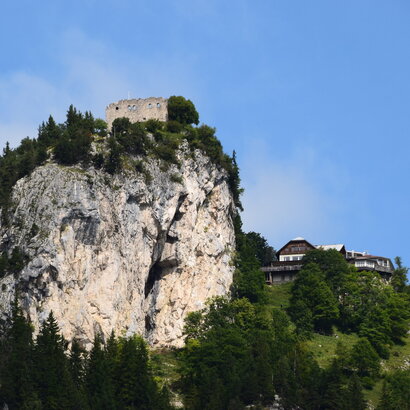
  • Falkenstein castle ruins, Germany's highest castle
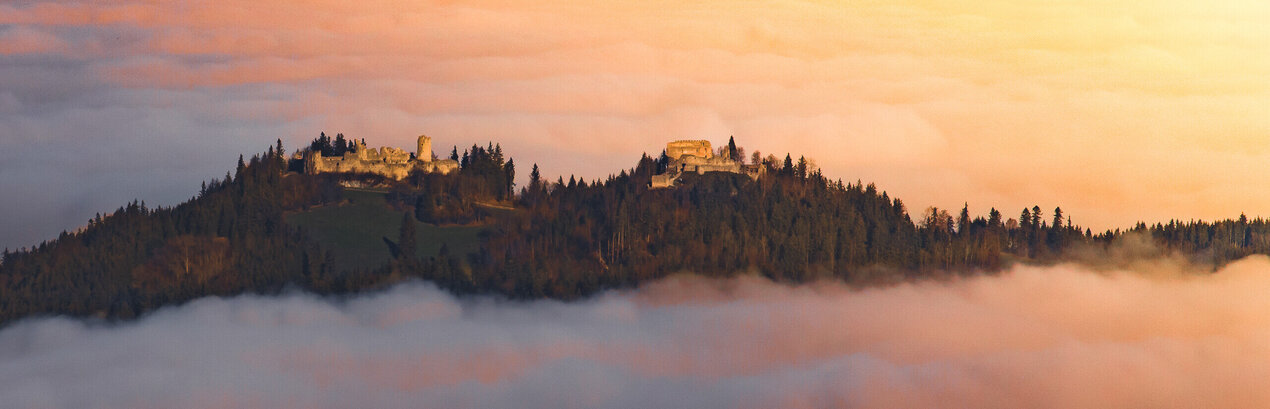
  • Eisenberg and Hohenfreyberg castle ruins (about 15 km away)
  • Ehrenberg castle complex near Reutte (Tyrol) with the highline179 suspension bridge

Castles, palaces and museums

Which museums are there in Füssen?
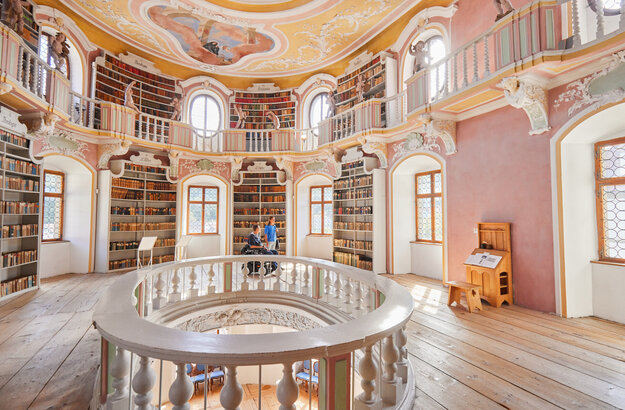
  • Füssen Town Museum in the former St. Mang Abbey: the town's history from Roman times to the modern era, a collection of historic lutes and violins, the abbey's history around the town's patron saint St. Magnus, and changing special exhibitions in Baroque rooms.
  • Galleries in the High Castle: the State Gallery (branch of the Bavarian State Painting Collections) with late Gothic art, and the Municipal Picture Gallery in the former prince-bishops' rooms. A combined ticket covers both museums.

The Museum of the Bavarian Kings is not in Füssen but in Hohenschwangau on Lake Alpsee. Füssen Town Museum

How can I visit Neuschwanstein Castle and where do I get tickets?

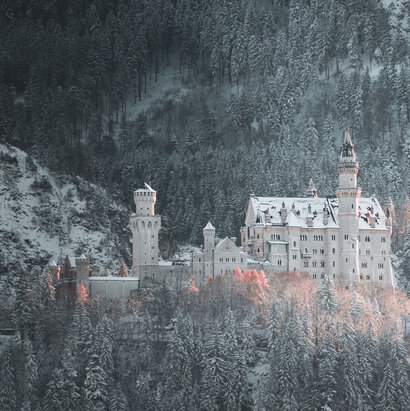
Neuschwanstein, King Ludwig II's dream castle and a UNESCO World Heritage Site since 2025, is a few kilometers from Füssen in Hohenschwangau. It can only be visited on a guided tour – with a guide or an audio guide. Tickets for Neuschwanstein and Hohenschwangau Castle are sold online by the Hohenschwangau Ticket Center, also as combo tickets with the Museum of the Bavarian Kings. Only a small daily quota is available on site at the Ticket Center, so book in good time – in winter, too. Children and young people up to 17 go free. Neuschwanstein Castle

How do I get from Füssen to the royal castles?

The castles are in the village of Hohenschwangau, a few kilometers away:

  • Bus: lines 73 and 78 from Füssen train station to Hohenschwangau (often crowded in summer – allow extra time).
  • On foot or by bike: 3.8 km on a paved path from the Tourist Information to the Ticket Center, or the hiking route via the Alpenrosenweg (approx. 2 hours).
  • By car: B16 towards Schwangau, follow the "Königsschlösser" signs; use the paid car parks (no roadside parking).

From the Ticket Center, continue on foot, by carriage or (to Neuschwanstein) by bus. Getting to Neuschwanstein Castle

What should I keep in mind when visiting the royal castles?
  • Visits are by guided tour only – book your ticket online in good time.
  • Allow at least 1.5 hours from the Ticket Center to Neuschwanstein; even after the bus or carriage ride, the last stretch is a 15-minute walk.
  • The Neuschwanstein tour involves around 300 steps; tours using the elevator for guests with limited mobility require advance reservation.
  • Photos around the castles are allowed for private use; photography inside is prohibited.
  • Mary's Bridge and the shuttle bus may close due to weather – see the Ticket Center's news ticker.

Visiting Neuschwanstein Castle

What can I experience at Hohenschwangau Castle?

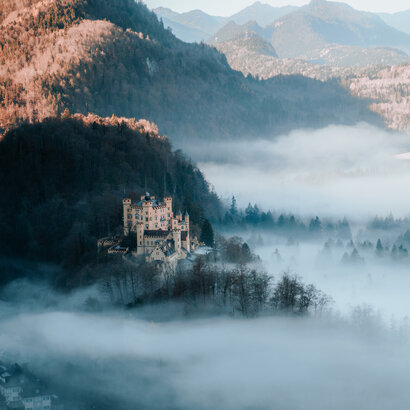
Hohenschwangau was the summer residence of the Bavarian royal family: Crown Prince Maximilian, later King Maximilian II, had the ruins of Schwanstein Castle rebuilt in the Neo-Gothic style from 1833 to 1837. His son Ludwig II spent much of his childhood and youth here. Murals with motifs from medieval legends and the ever-present swan characterize the rooms. The castle can only be visited on a guided tour; from the Ticket Center you reach it on foot or by horse-drawn carriage. Behind the castle, the Kalvarienberg with its Chapel of St. Mary is worth a walk. Hohenschwangau Castle

What is the Museum of the Bavarian Kings?

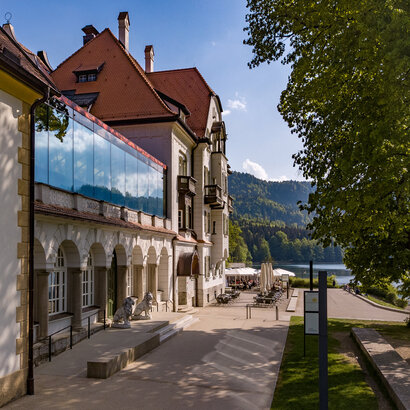
The Museum of the Bavarian Kings is in Hohenschwangau, right on Lake Alpsee below the royal castles. It tells the story of the House of Wittelsbach – from the lives and work of King Maximilian II and King Ludwig II to the end of the monarchy in Bavaria – with original exhibits and a multimedia presentation. Tickets are available online from the Hohenschwangau Ticket Center or at the museum ticket desk, also as combo tickets with the castles. Children and young people under 18 accompanied by an adult enter free. Museum of the Bavarian Kings

Why is Füssen known as a music town?

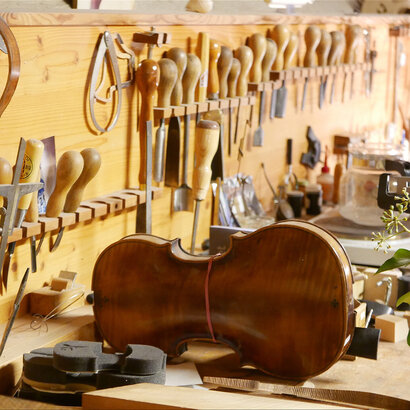
Lute and violin making has a tradition of more than 450 years in Füssen: Europe's first lute makers' guild was founded here in 1562, and Füssen is regarded as the cradle of European lute and violin making. The Lute Makers' Fountain on Brotmarkt and the instrument collection in the Füssen Town Museum recall this heritage, and violin makers still work in the town today. The tradition lives on in events from the Imperial Hall Concerts and the vielsaitig festival to the Neuschwanstein Festival Theater and the Königswinkel Open Airs, with classical music, musicals and pop. Music town Füssen

What events take place in Füssen and where can I find the dates?

Füssen offers a varied program of events: city tours, traditional folk music, musicals, classical concerts and pop music. Annual highlights include:

  • the Streetfestival in the old town in summer
  • the Imperial Hall Concerts and the vielsaitig festival at St. Mang Abbey
  • the Advent market in the courtyard of St. Mang Abbey
  • the Rutschparty on December 30 and the New Year's torch swim in the Lech
  • LechKlänge and Chormomente in late winter/spring

All current dates, including bookable guided tours and hikes, are listed in the events calendar. Events calendar

What is the Neuschwanstein Festival Theater and which musicals are on?

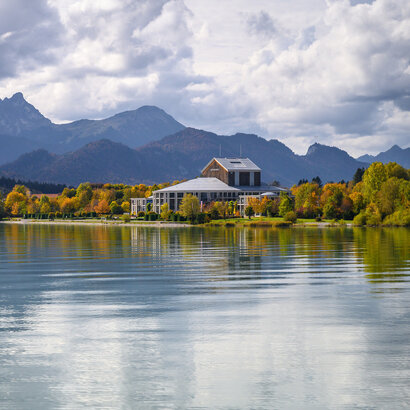
The Neuschwanstein Festival Theater (Festspielhaus Neuschwanstein) is an event venue on the shore of Lake Forggensee with a view of Neuschwanstein Castle. Built for a musical about Ludwig II, it still shows the Ludwig² musical, alongside changing musicals such as "Der Geist der Weihnacht" (A Christmas Carol) during Advent, concerts, variety shows and the Königswinkel Open Airs in summer. Its stage is Europe's largest revolving musical stage (28 m in diameter) and can be explored on backstage tours. Halls and the royal box can also be hired for events. The current program shows which musical is on. Neuschwanstein Festival Theater

What is the Streetfestival in Füssen?

The Streetfestival is a two-day street festival in Füssen's old town in summer. On the opening evening, international DJs play; on the second day, the old town squares host live music as well as theater, dance and acrobatics by international street artists. The old town restaurants serve local specialties alongside dishes from various international cuisines. Most recently, admission was free. Streetfestival

What can I find at the Advent market in Füssen?

The Advent market takes place on two Advent weekends in the courtyard of the Baroque St. Mang Abbey in the old town. In market huts modeled on Füssen's old town façades you'll find gifts, Christmas tree decorations and handicrafts, and you can watch artisans at work. There is also mulled wine, punch and other treats. Backpacks and larger bags are checked at the entrance. Advent market

Which traditions and customs can I experience in Füssen?
  • Funkenfeuer (bonfires to drive out winter) in February/March in Bad Faulenbach and Hopfen am See
  • Viehscheid: at the start of autumn, decorated cattle are driven down from the alpine pastures
  • Colomansfest in October in neighboring Schwangau, with a procession, decorated horses and traditional costume groups
  • Klausentreiben at the Füssen St. Nicholas market
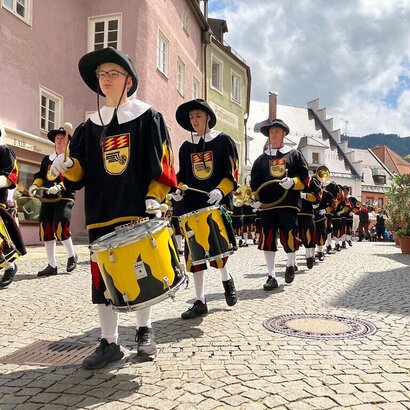
  • brass bands and traditional costume clubs from Füssen and its districts

The Allgäuer Heimatwerk in Drehergasse showcases traditional craftsmanship. Traditions in Füssen

What can I experience culinarily in Füssen and where can I eat out?

Typical Allgäu dishes include Kässpatzen (cheese noodles), mountain cheese and hearty snack platters, often with regional beer, served in traditional inns and mountain huts. In the old town you'll also find many owner-run restaurants serving Mediterranean, Asian or vegan food. The new Culinary Compass gives an overview with opening hours, rest days and menus and is being expanded with more restaurants. The blog post "Restaurantklassiker" (in German) presents five traditional restaurants. Culinary Compass

Where can I have breakfast, coffee or ice cream in Füssen?

The old town has numerous cafés with freshly baked cakes, pralines and sweet Allgäu specialties. Zimtschneckerl is known for homemade cakes and cinnamon rolls, the traditional Kurcafé for its Sissi cake, and Café Freiday serves breakfast. On warm summer days, Füssen's wandering ice cream maker Beppo is out somewhere in the old town with his ice cream carriage – it has no fixed location (blog post "Eiskalte Versuchung", in German). Culinary delights in Füssen

Where can I buy regional products in Füssen?
  • Weekly market: year-round on Thursdays from 8 a.m. to 1 p.m. at the Morisse car park (P3) on Kemptener Straße, with local specialties, fruit and vegetables (if a public holiday falls on a Thursday, the market is held on Wednesday)
  • Market hall on Schrannenplatz: from baked goods and Allgäu cheese to fresh fish
  • Traditional markets such as the Josefi, Ascension Day and church fair markets
  • Direct marketers around Füssen, presented in a blog post (in German)

Weekly market, markets and market hall

What are culture hosts?

Culture hosts (Kulturgastgeber*innen) are accommodations in Füssen and its districts certified under the Allgäu brand with a special focus on culture. They give you personal advice on cultural highlights, have up-to-date event information and help with booking tickets. Staying for just one night is possible. Some offer theme rooms, historical pictures or an in-house library. Culture hosts in Füssen

What excursion destinations are there in Füssen?

In Füssen itself, the High Castle, the Baroque St. Mang Abbey, the old town and the Lech, the Neuschwanstein Festival Theater, Kneipp experiences, the natural landscapes with their lakes as well as the nearby royal castles and mountain cable cars are all worth a visit. Füssen lies in the triangle formed by Munich, Augsburg and Innsbruck: many destinations in the Allgäu, Upper Bavaria and Tyrol can be reached on half-day or day trips, and Allgäu towns such as Kempten or Kaufbeuren also by public transport. Excursion destinations around Füssen

Which holiday routes pass through Füssen?

Three holiday routes meet in Füssen:

  • Romantic Road: around 460 km from Würzburg to Füssen, its southern end point
  • German Alpine Road: 450 km from Lindau to Lake Königssee
  • Via Claudia Augusta: the former Roman road, around 600 km from Donauwörth across the Alps to Italy

You can explore all three by car, by bike or on foot; from April to October, buses also run along the Romantic Road. Meeting point of the holiday routes

What is the Lauschtour and is there an audio guide for Füssen?

The Lauschtour is a free audio walking tour that accompanies you with information and stories about Füssen's main sights. How it works: download the Lauschtour app from the Play Store or App Store, search for "Stadtrundgang Füssen" and download the tour. You listen on your own smartphone – with your own headphones or via the speaker; no headphones are provided. The tour starts at the Seilerturm opposite the Tourist Information and takes about 1 hour 15 minutes including the High Castle. It is also available in English, in plain language and with audio description. Lauschtour

What guided city tours are there in Füssen?

Experienced guides offer public tours as well as group tours that can be booked individually. The leisure program includes year-round city and themed tours and guided hikes on fixed dates – with low-priced individual tickets you can book online or at the Tourist Information offices; on selected tours you also get to know the Füssen Town Museum. Dates are listed in the events calendar. Groups can request tours on a date of their choice, including culinary ones such as the beer tour with tasting. City tours in Füssen

Is there a little tourist train through Füssen's old town?

No, there is no longer a tourist train through the old town. The best way to explore it is on foot – for example with the free Lauschtour audio tour on your smartphone or on a public guided city tour. City tours in Füssen

What is the vielsaitig festival?

The vielsaitig festival is a chamber music festival through which the town of Füssen cultivates its heritage as the cradle of European lute and violin making. It takes place every year in late August/early September in the Baroque Imperial Hall (Kaisersaal) of the former St. Mang Abbey. The program is mainly classical and follows a new theme each year, bringing together top-class artists from around the world. Tickets are available at the Füssen Tourist Information and from AllgäuTicket. vielsaitig festival

What are the LechKlänge?

The LechKlänge are a series of events in Füssen featuring well-known names from music, cabaret and comedy. They take place in late winter in the market hall on Schrannenplatz and are organized by Füssen Tourismus und Marketing. The program and dates are published a few weeks in advance. LechKlänge

What are the Imperial Hall Concerts?

The Imperial Hall Concerts (Kaisersaalkonzerte) are a summer series of classical chamber music. They take place in the Kaisersaal, the Baroque banqueting hall of the former Benedictine Abbey of St. Mang, which became a cultural center of the region early on. Internationally renowned chamber music ensembles and soloists perform. The series is organized by the town of Füssen's culture department; tickets are available at the Füssen Tourist Information and from AllgäuTicket. Imperial Hall Concerts

What is the New Year's torch swim?

On January 1, at dusk, up to a hundred lifeguards from the water rescue services of Füssen and the surrounding area climb into the cold Lech and drift downstream past the old town carrying torches. Guests usually cannot take part – you experience the spectacle as a spectator, ideally from the banks of the Lech or from the Theresienbrücke below St. Mang Abbey. From 4 p.m. there is mulled wine, punch and sausages, and the first torches appear at around 5:30 p.m. Gun salutes and fireworks round off the evening. New Year's torch swim

What is the Rutschparty in Füssen?

The Rutschparty is Füssen's joint farewell to the old year – held one day before New Year's Eve, on December 30. From 6 p.m., DJs and live bands play on Kaiser-Maximilian-Platz in front of the Tourist Information, with stalls serving drinks and snacks around the dance floor. The party takes place outdoors and admission is free. Rutschparty

What cultural activities are there in Füssen in winter?
  • Royal castles: fewer crowds outside the Christmas holidays; when there is snow, you can ride up to Neuschwanstein by carriage or sleigh.
  • Advent market in the courtyard of St. Mang Abbey
  • Neuschwanstein Festival Theater: "Der Geist der Weihnacht" during Advent, plus Ludwig² and family musicals
  • Rutschparty on December 30 and the New Year's torch swim on January 1
  • LechKlänge and Chormomente in late winter
  • Füssen Town Museum and High Castle with shorter winter opening hours

Culture in winter (in German)